Parking Lot Line Striping in Kansas City
Stall layout, accessible spaces, fire lanes, and flow — marked so the lot works and holds up to a plow season.
The paint is the easy part
Striping decides how many vehicles your lot holds and how well they move through it. Stall angle is the main lever: angled stalls are easier to enter and forgiving on narrow lanes, but they cost you total count. Ninety-degree stalls fit the most cars in a given area and need wider drive lanes to work.
Then there is what the lot has to do beyond parking — where deliveries come in, where the dumpster has to be reachable by a truck with a lift arm, where pedestrians cross, and which lanes have to stay clear for fire access. A layout that ignores those creates a lot that is technically full of stalls and miserable to use.
We measure the surface, work out the layout against the entrances and the building doors, and mark it before any paint goes down.
What we mark
Everything a lot needs to be usable, legal, and safe to move through.
Stalls
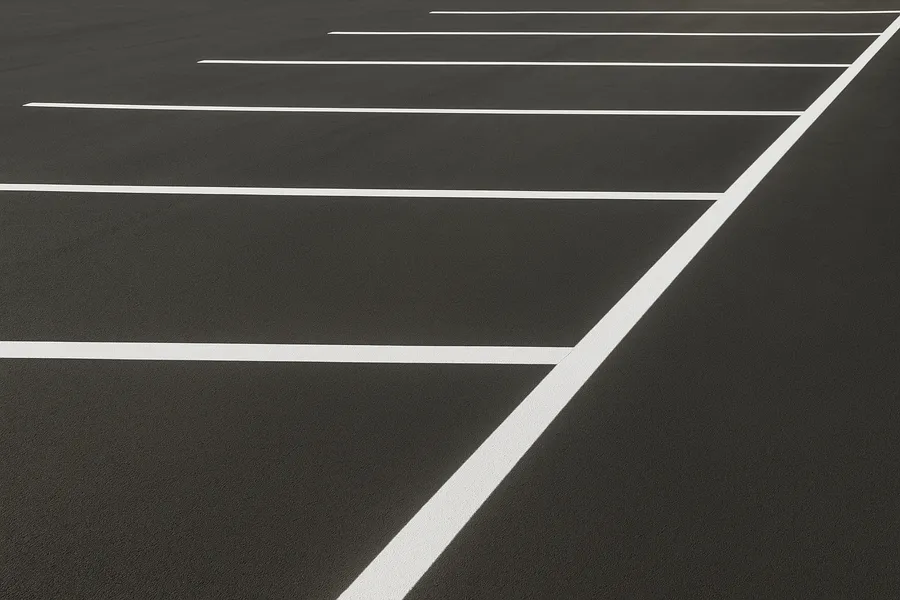
Standard, compact, and angled. Stall width and drive-lane width trade against each other — the layout decides how many cars fit and how easily they get in.
Accessible spaces
Van-accessible and standard accessible stalls with their access aisles, positioned on the shortest route to the entrance and marked to spec.
Fire lanes
Marked and lettered to what the local fire marshal expects. Requirements vary between jurisdictions in this metro, so we mark to the one you are in.
Directional arrows
Flow control at entrances, drive lanes, and one-way aisles — the markings that stop two cars meeting head-on between rows.
Crosswalks and stop bars
Pedestrian routes across drive lanes, and stop bars where the lot meets the street or an internal intersection.
Loading and no-parking zones
Hatched areas for dock approaches, dumpster access, and the spaces that have to stay clear for deliveries.
Traffic paint or thermoplastic
Most lots get water-based traffic paint. It goes down fast, costs less, and re-coats cleanly when the layout needs to change — which matters more than people expect, because tenants change and so do their delivery patterns. Glass bead can be added into the wet paint for reflectivity where night visibility matters.
Thermoplastic is applied hot and fuses into the asphalt. It costs more up front and lasts several times as long, holds reflectivity better, and stands up to concentrated wear — worth it at entrances, on crosswalks, and in lanes every vehicle uses, rarely worth it on every stall line in a lot that gets plowed each winter.
Striping across the metro
Retail, office, industrial, church, and multi-family lots on both sides of the state line.
Related services
Commercial Paving
New lots get their layout designed before the surface goes down, not after.
Sealcoating
Sealcoat covers existing markings — striping follows once the coating cures.
Asphalt Repair
Failed areas get repaired before new paint goes over them.
Asphalt Overlays
A resurfaced lot is a blank surface and needs a full re-layout.
Striping questions
What does ADA compliance require in a parking lot?
The number of accessible stalls scales with the total space count in the lot, and a share of those must be van-accessible with a wider access aisle. Each accessible stall needs an adjacent marked access aisle, a compliant route from the aisle to the entrance, and signage at the right height. Slope matters as much as paint — accessible stalls and aisles have limits on cross-slope, which is a grading question, so a lot that was never graded for it cannot be striped into compliance.
Paint or thermoplastic — which should I use?
Traffic paint is the normal choice for parking lots: lower cost, fast to apply, easy to change when a layout needs to move, and it re-coats cleanly on the next cycle. Thermoplastic is applied hot and bonds into the surface, lasting several times longer and holding reflectivity better, which is why it shows up on roadways, high-traffic entrances, and markings that take constant wear. On a typical lot, paint on the stalls and thermoplastic only where traffic concentrates is the sensible split.
How often does a lot need re-striping?
Most lots want it every one to two years with traffic paint. Wear is not even across a lot — entrance lanes, the rows nearest the door, and anywhere plows scrape will fade years before the back row does. Snow removal is the biggest single factor here; a hard winter of plowing takes more paint off than a year of traffic.
Can you lay out a new lot from scratch?
Yes. On a new or resurfaced surface we work from the dimensions and the entrance positions to lay out stalls, drive lanes, accessible spaces, and flow, then mark and paint it. The goal is usually the most usable spaces without making the lanes tight enough to cause door dings and blocked aisles — and getting the accessible spaces right the first time, since moving them later can mean regrading.
Ready to pave it right?
Get a straight estimate and a clear timeline. Tarmasters Asphalt Paving handles driveways, parking lots, and repairs across the Kansas City metro.
Call Now: (816) 789-0700