Asphalt Repair Across the Kansas City Metro
Potholes, cracking, rutting, and edge failure — cut back to sound material and repaired at the depth the damage actually goes.
What we are looking at when we look at your pavement
Different damage means different causes, and the cause decides the fix. Here is what each one is telling us.
Potholes
Water got through the surface, softened the base, and traffic punched the weakened asphalt out. A pothole is a symptom — the hole is smaller than the failed area under it, which is why cold-patch out of a bag comes back out in a month.
Alligator cracking
Interconnected cracks in a scaled pattern. This one is diagnostic: it means the base is flexing under load. Surface treatment over alligatoring buys a season at most, because nothing on top fixes something underneath.
Raveling
The surface losing aggregate — loose stone underfoot, a texture that keeps getting coarser. Usually oxidation and age, sometimes a mix or compaction problem from the original build. Caught early, this one is a sealcoating conversation.
Rutting
Depressions along the wheel path where traffic runs the same line. It points at a section too thin for the load it carries, or a base that was not compacted enough to hold it.
Edge failure
Crumbling that works inward from an unsupported edge. Common on driveways and lots without curb, and it accelerates once the break lets water in along the side.
Sunken or soft spots
An area that dishes, holds water, or feels soft under a vehicle. Something under the surface is wet or was never compacted. Filling the low spot without fixing what caused it just moves the problem a few months out.
Surface patch or full depth
A surface patch replaces the top layer where the damage is genuinely shallow — raveling in one area, a scuffed section, damage from something spilled or dragged. It is quick and it holds as long as the base under it is sound.
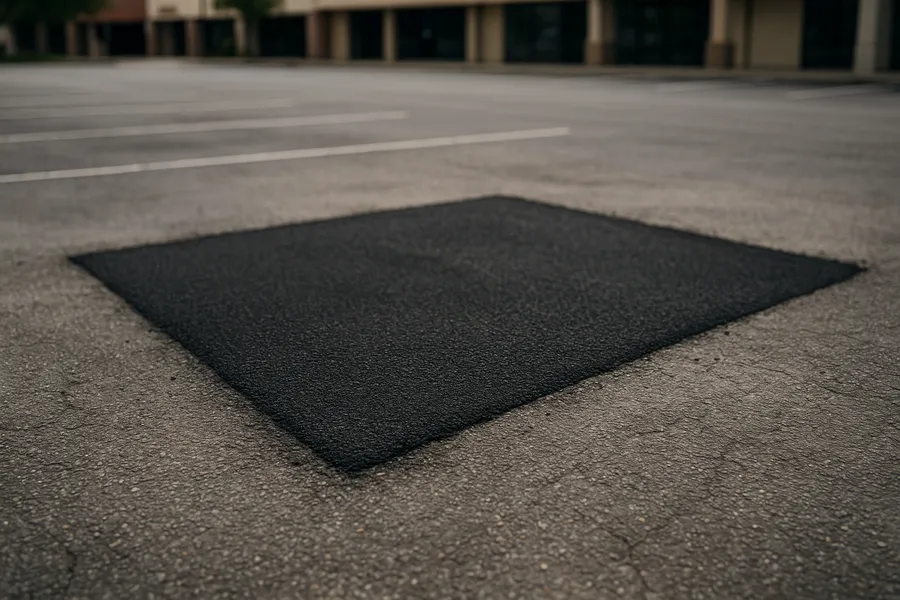
A saw-cut full-depth patch is the real repair for a pothole or a failed area. We saw a square edge back to sound pavement, take the asphalt out down to the base, fix or replace the base material underneath, then place and compact new asphalt in the opening. Square edges matter: an irregular torn edge is a seam that opens again.
Infrared patching heats the existing asphalt around a defect so new material bonds into it rather than sitting in it as a separate plug, which leaves fewer seams for water to find. It works well on surface-level defects and seams — it does not fix a base problem, because nothing applied from the top does.
Which one you need is a base question, not a preference. We answer it by what the damage is doing, not by what is fastest to sell.
When patching stops being worth it
There is a point where repairs stop being maintenance and start being a subscription. It usually arrives when the failed area covers a large share of the surface, when alligator cracking has spread beyond isolated patches, or when the same spots keep failing after being properly repaired.
At that stage the honest options are an overlay if the base is still structurally sound, or full replacement if it is not. If a repair will hold, we will say so. If it will not, we will tell you that too — a patch we know will fail is not worth your money or our time.
Asphalt repair across the metro
Driveways, lots, and private drives on both sides of the state line.
Related services
Crack Sealing
The cheapest work on the list — keeps water out before cracks become patches.
Asphalt Overlays
When the damage is widespread but the base underneath still holds.
Asphalt Paving
Full replacement when the base has failed past what patching can carry.
Sealcoating
Surface protection for pavement that is sound once the repairs are done.
Repair questions
Should I repair this or replace it?
It comes down to how much of the surface has failed and whether the base is intact. Isolated potholes, a few soft spots, or damage in one section of an otherwise sound lot are repair work. Alligator cracking spread across a large share of the area, multiple sunken spots, or potholes that keep reappearing in the same places mean the base has gone, and patching becomes an annual bill instead of a fix. We will walk it with you and say which one you are looking at.
Do asphalt patches actually last?
A saw-cut full-depth patch does. The failed material comes out square to sound edges, the base gets repaired or replaced underneath, and the new asphalt is compacted in place — that patch behaves like the pavement around it. What does not last is throwing cold mix into a wet hole without cutting back to sound material or addressing the base. Those come out with the next freeze.
What causes potholes here?
Water and the freeze-thaw cycle, almost every time. Water gets through a crack or a porous surface into the base, freezes, expands, and lifts the asphalt above it. When it thaws, a void is left, traffic flexes the unsupported surface, and it breaks through. Kansas City runs through that cycle repeatedly each winter, which is why potholes here tend to appear in late winter and early spring.
What does asphalt repair cost?
It scales with area and depth, not with the number of holes. A full-depth patch costs more per square foot than a surface repair because there is excavation, base work, and disposal involved. Several small patches in one visit cost less each than the same patches spread across separate trips. We measure the failed areas, tell you which need full-depth work and which do not, and price it before we start.
Ready to pave it right?
Get a straight estimate and a clear timeline. Tarmasters Asphalt Paving handles driveways, parking lots, and repairs across the Kansas City metro.
Call Now: (816) 789-0700