Asphalt Paving in the Kansas City Metro
New asphalt for residential driveways and commercial parking lots, on both sides of the state line. Insured and bonded, paving since 2014.
What asphalt paving covers
Paving is the full build: a compacted stone base over prepared ground, then hot-mix asphalt laid and rolled on top of it. It is what goes in when there is no surface yet — a new driveway, an expansion, a lot going in with a new building — and it is what replaces a surface that has failed past the point where patching is worth doing.
The line between repair and replacement is the base. If the base is intact and the damage is on the surface, an overlay or a repair will hold for years and costs less. Once the base has broken down — cracks spreading in a connected pattern, areas that sink, potholes that keep coming back in the same place — new material over the top of it just fails the same way on a delay.
We pave both sides of the work: residential driveways and commercial lots, from a single approach to a lot phased around a business that has to stay open while it goes in.
Our paving process
Five stages. Most of what decides how long the surface lasts happens before any asphalt shows up.
Site prep and grading
Old surface and vegetation come out, and the subgrade gets shaped so water runs off the finished surface instead of sitting on it. We proof-roll the subgrade to find soft spots and fix them now — a soft area left in the ground will show up as a low spot or an alligatored patch a few winters from now.
Stone base
Crushed aggregate goes down over the prepared subgrade and gets compacted in lifts rather than all at once, because a deep layer compacted in one pass is only dense at the top. Base depth is set by what the surface has to carry: a car driveway and a lot that takes loaded delivery trucks are not the same build.
Laying the asphalt
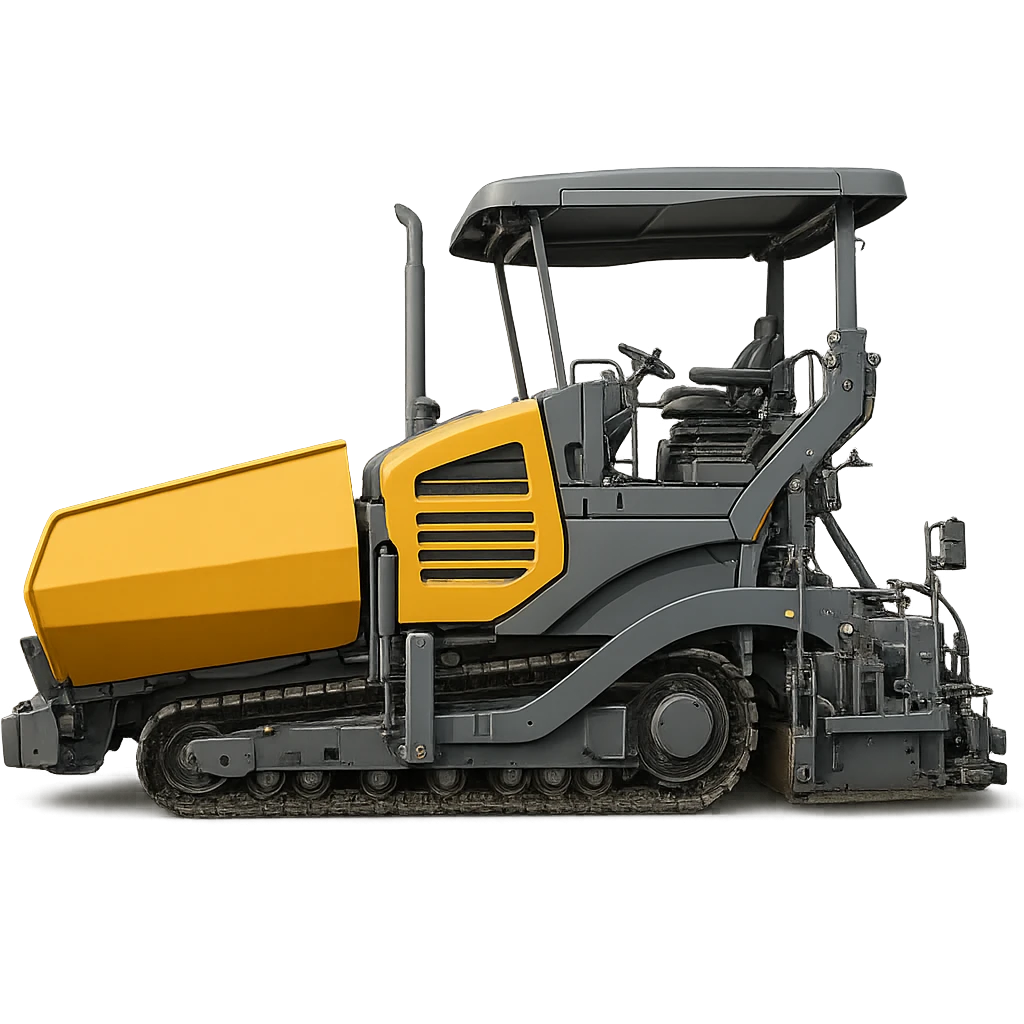
Hot-mix asphalt is placed with a paver at the thickness the use calls for. Heavier commercial work is often built in two courses — a coarser binder layer for strength, then a finer surface course on top — while a residential driveway is usually a single course over a good base.
Compaction
Rollers work the mat while it is still at temperature, and this is the step that decides how long the surface lasts. Density is what keeps water out of the asphalt itself. Once the mat cools past working temperature you cannot put that density back in, which is why paving is scheduled around weather and haul time.
Edges, transitions, and clean-up
We tie the new surface into the garage apron, the street, and any pavement it meets, so there is no lip to catch a plow blade or trap water. Edges get support where there is no curb, the site gets cleaned, and you get a straight answer on when it is ready for traffic.
Driveways and parking lots are different builds
Same materials, same process, different specification. What changes is the load the surface has to carry, and everything downstream of that.
Residential driveways
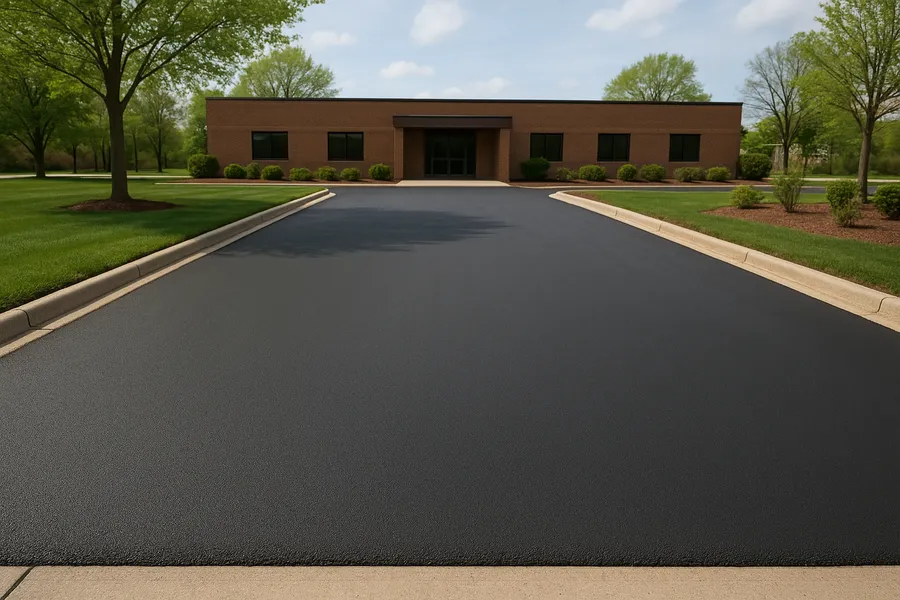
Built for cars and light trucks, so the section is thinner than commercial work — but the base still has to be right, and the edges matter more. A driveway usually has no curb holding it in, so unsupported edges are the first thing to crumble. Drainage and the tie-ins at the garage and the street are the rest of the job.
Driveway paving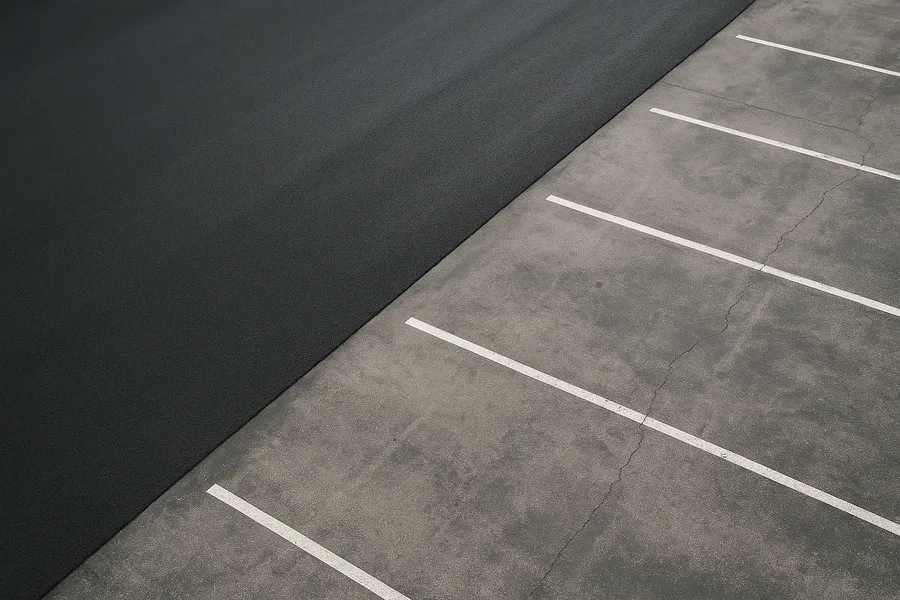
Commercial parking lots
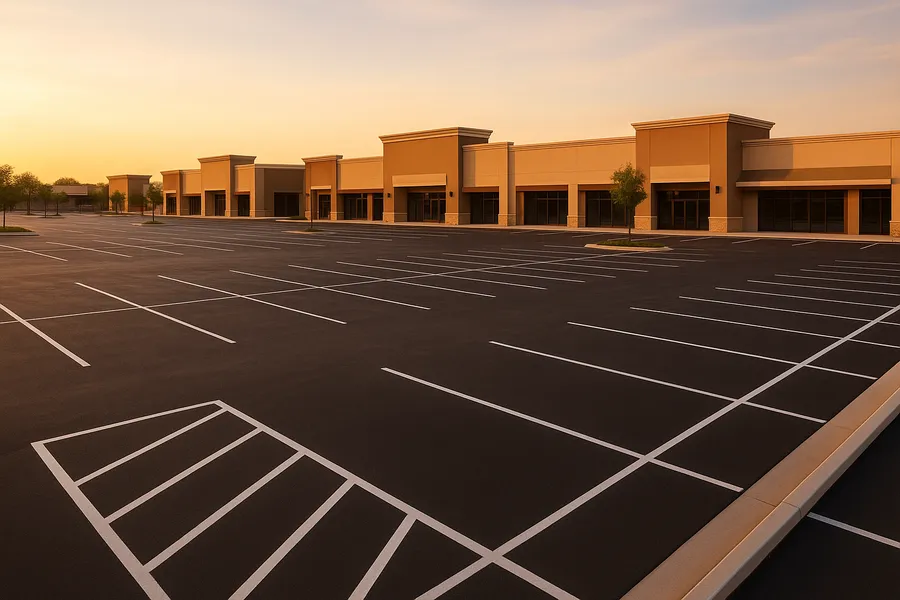
Thicker sections, because delivery trucks and dumpster pickups concentrate far more weight than a car ever will — often in the same few spots, week after week. Layout comes into it too: drive lanes, where water goes, and striping once the surface is down. Most lots get phased so the business stays open.
Commercial paving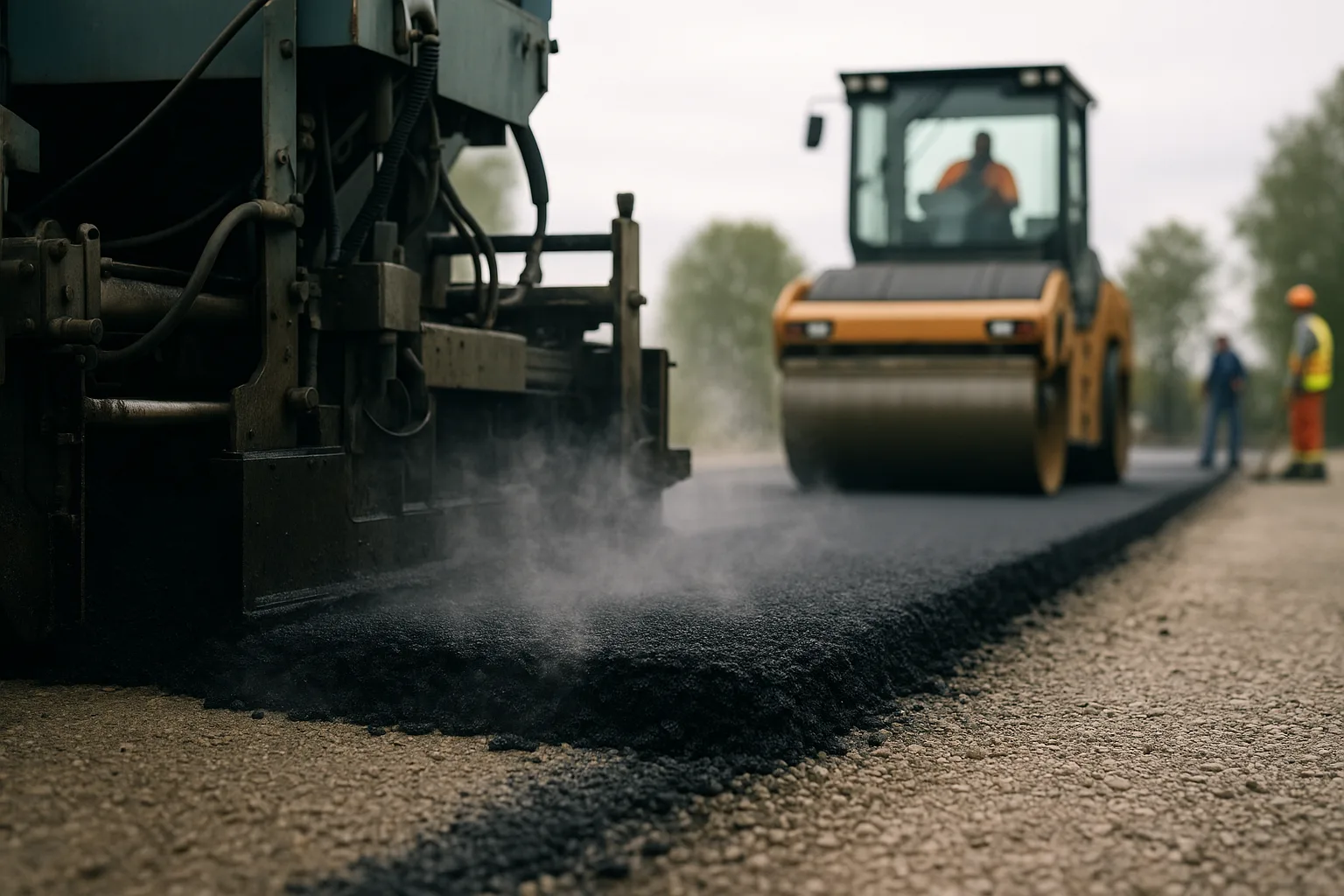
What makes paving last
The surface is the least of it. Asphalt fails from underneath, and almost every failure you can see from the street traces back to one of four things.
Drainage. Water is what ends asphalt. If the grade lets it stand, it finds its way through the surface and into the base, and around here it then freezes and expands. That is what turns a hairline crack into a pothole over a couple of winters.
The base. The stone base carries the weight, not the black on top. A thin or poorly compacted base flexes under load, and asphalt that flexes cracks.
Thickness matched to the load. A section built for cars put under loaded trucks will rut and crack early. This is the most common reason a lot fails years before it should.
Compaction. Density is what makes asphalt effectively waterproof. Under-compacted asphalt is porous, and porous asphalt takes on water and comes apart from the inside. It has to be rolled while hot, which is why we watch the weather and the haul time as closely as the crew schedule.
Where we pave
We pave across the Kansas City metro on both sides of the state line, from Lee's Summit out through Jackson and Johnson counties and the communities around them.
Asphalt paving in Kansas City, MO
Asphalt paving in Lee's Summit, MO
Asphalt paving in Independence, MO
Asphalt paving in Blue Springs, MO
Asphalt paving in Overland Park, KS
Asphalt paving in Olathe, KS
Asphalt paving in Shawnee, KS
Asphalt paving in Lenexa, KS
Asphalt paving in Lawrence, KS
We cover 46 cities across Missouri and Kansas — see the full service area.
Related services
Not every surface needs paving. If yours is still structurally sound, one of these will get you more years for less money.
Asphalt Repair
Potholes, edge failures, and soft spots cut back to sound material and patched flush.
Overlays / Resurfacing
A new surface over a base that still holds — less than a full replacement when the foundation is good.
Sealcoating
A protective coat for asphalt that is still sound. It slows oxidation and keeps water off the surface.
Line Striping
Layout and striping once a lot is down — stalls, fire lanes, and accessible spaces marked to code.
Asphalt paving questions
How long before we can drive on new asphalt?
Passenger vehicles are usually fine after a day or two, depending on the temperature and how thick the mat is — hot weather keeps it soft longer, so we give you the number for your job before we leave. Full curing takes months, and new asphalt stays soft enough early on that a sharp turn from a standing start can scuff it, and a jack stand or a trailer jack can dent it. Keep heavy loads off it for the first few weeks.
What affects the cost of a paving job?
Square footage first, then how much old material has to come out and what the base underneath looks like. A job over a base that still holds costs less than one where we have to rebuild the base or correct the grade. After that: the thickness the use calls for, drainage work, access for equipment, and whether the lot needs striping when it is done. We measure the job and give you a fixed number before anything starts.
Asphalt or concrete — which is right for me?
Asphalt costs less per square foot, goes in faster, and gets you back on the surface sooner. It flexes with the freeze and thaw cycles we get here rather than cracking in slabs, and when it does need work you can cut out a section and patch it without the repair standing out. Concrete costs more up front and lasts longer, and it holds up better under heavy loads that sit in one place. Tarmasters is the asphalt division of Ford Concrete and Paving, so we do both — if concrete is the better answer for your job, we will tell you that.
How long does new asphalt last?
Typically 15 to 20 years, and longer with sealcoating and timely repairs. What decides it is the base, the drainage, and the use. Asphalt over a properly compacted base on ground that sheds water lasts; asphalt that holds standing water or carries heavier loads than it was built for goes early, no matter how good the surface looked on day one.
Ready to pave it right?
Get a straight estimate and a clear timeline. Tarmasters Asphalt Paving handles driveways, parking lots, and repairs across the Kansas City metro.
Call Now: (816) 789-0700