Asphalt Overlays & Resurfacing in Kansas City
A new surface over a base that still holds — and a straight answer about whether yours does.
First question: can your base carry a new surface?
An overlay is a good deal or a waste of money, and which one it is has almost nothing to do with how the surface looks. It depends on what is underneath.
An overlay works when
The base is stable and the surface has simply aged out: greying and oxidation, raveling, scattered surface cracks, minor low spots, faded and worn but not moving. Drainage still works. Isolated failed areas can be repaired first and the rest of the lot is sound. This is the common case on a lot in its second decade that was built properly.
It does not when
Alligator cracking has spread across a large share of the area, sections sink or hold water, or potholes keep returning in the same places after proper full-depth repairs. All three say the base is moving. New asphalt over movement cracks along the same lines, and you have bought a few years at close to replacement cost. That is when full replacement is the cheaper answer over any honest time horizon.
Mill-and-overlay, and why the milling matters
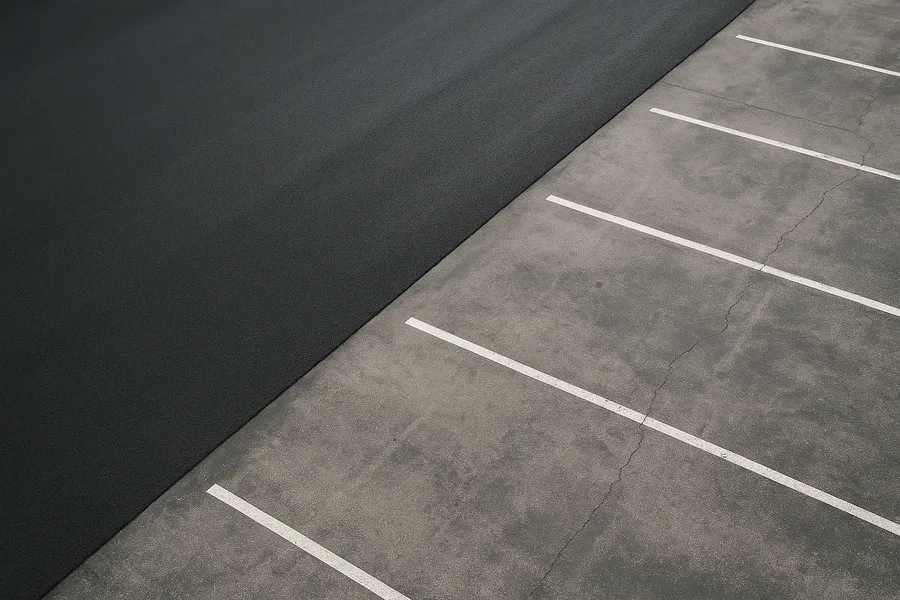
The straightforward version of an overlay is a new layer of hot mix bonded to the existing surface. The problem with doing only that is height: every surface you add raises the lot, and lots have fixed elevations they have to meet — curb faces, gutter lines, door thresholds, drain inlets, and the transitions at the street.
Milling removes the top of the old surface first, so the finished elevation ends up where it started. It also takes off the most weathered material and leaves a rough profile the new asphalt keys into rather than simply resting on.
Where a surface has deformed, a leveling course goes down first — a thin correcting layer that fills the low spots so the finished surface is flat and the wearing course ends up a consistent thickness rather than thick in the dips and thin over the humps.
Reflective cracking, honestly
Cracks in the old pavement tend to work their way up through a new layer over the same lines. Anyone who tells you an overlay makes cracking impossible is selling. What is true is that you can slow it down a great deal: mill off the cracked material rather than bury it, seal and repair what stays, use a leveling course where the surface has moved, and lay the overlay thick enough for the traffic it carries.
Where the old cracks are just thermal cracks in otherwise stable pavement, the risk is manageable and an overlay is a sound investment. Where the cracking is structural, milling deeper or replacing is the honest recommendation, and we will make it.
Resurfacing across the metro
Commercial lots, private drives, and residential driveways on both sides of the state line.
Related services
Asphalt Milling
The step before most overlays — removes the old surface so grades and curb heights stay put.
Asphalt Repair
Failed areas get repaired before an overlay, not covered by it.
Asphalt Paving
Full replacement when the base underneath cannot carry a new surface.
Line Striping
A resurfaced lot is a blank slate — layout goes back down after.
Overlay questions
Overlay or full replacement?
The base decides. If the base is stable and the problems are surface-level — oxidation, raveling, scattered cracking, a tired-looking lot — an overlay gets you many years for a fraction of replacement cost. If the base has failed, and you can see that in widespread alligator cracking, areas that sink, or potholes that keep returning after proper repairs, an overlay is money spent on a surface that will crack the same way within a few seasons. We core or dig test spots when it is genuinely ambiguous rather than guess.
Will the old cracks come back through the new asphalt?
That is reflective cracking, and it is the main risk with any overlay. Movement in the old pavement telegraphs up through the new layer, usually over the same lines within a few years. Milling the surface first removes some of that, a leveling course helps, and a thicker overlay resists it longer. What eliminates it is removing the cracked material — which is the argument for mill-and-overlay rather than paving straight over the top.
How long does an overlay last?
A well-specified overlay on a sound base commonly gives you 8 to 15 years, and the range is wide because it depends almost entirely on what is underneath and how much movement is left in it. Overlays on well-prepared, milled surfaces reach the top of that; thin overlays laid over unrepaired cracking sit at the bottom.
How much cheaper is an overlay than replacing?
Meaningfully — you are buying a new surface without excavation, base rebuilding, or hauling the old structure away. The savings shrink if the lot needs extensive repairs and milling first, and at some point the combined bill approaches replacement while still delivering a shorter service life. We will tell you when a job has crossed that line rather than sell you the cheaper-sounding option twice.
Ready to pave it right?
Get a straight estimate and a clear timeline. Tarmasters Asphalt Paving handles driveways, parking lots, and repairs across the Kansas City metro.
Call Now: (816) 789-0700