Asphalt Paving Serving Leawood and Nearby Communities
Executive drives and lifestyle-centre lots — where how the finished surface looks is part of the specification, not a bonus.
Tarmasters paves driveways and commercial lots throughout Leawood, Kansas. Over Martin-Woodson series clay-loam that moves an inch or two seasonally, a lasting surface starts with a compacted limestone base — and here the joints, edges, and finish are held to a standard as well. Insured, bonded, paving since 2014.
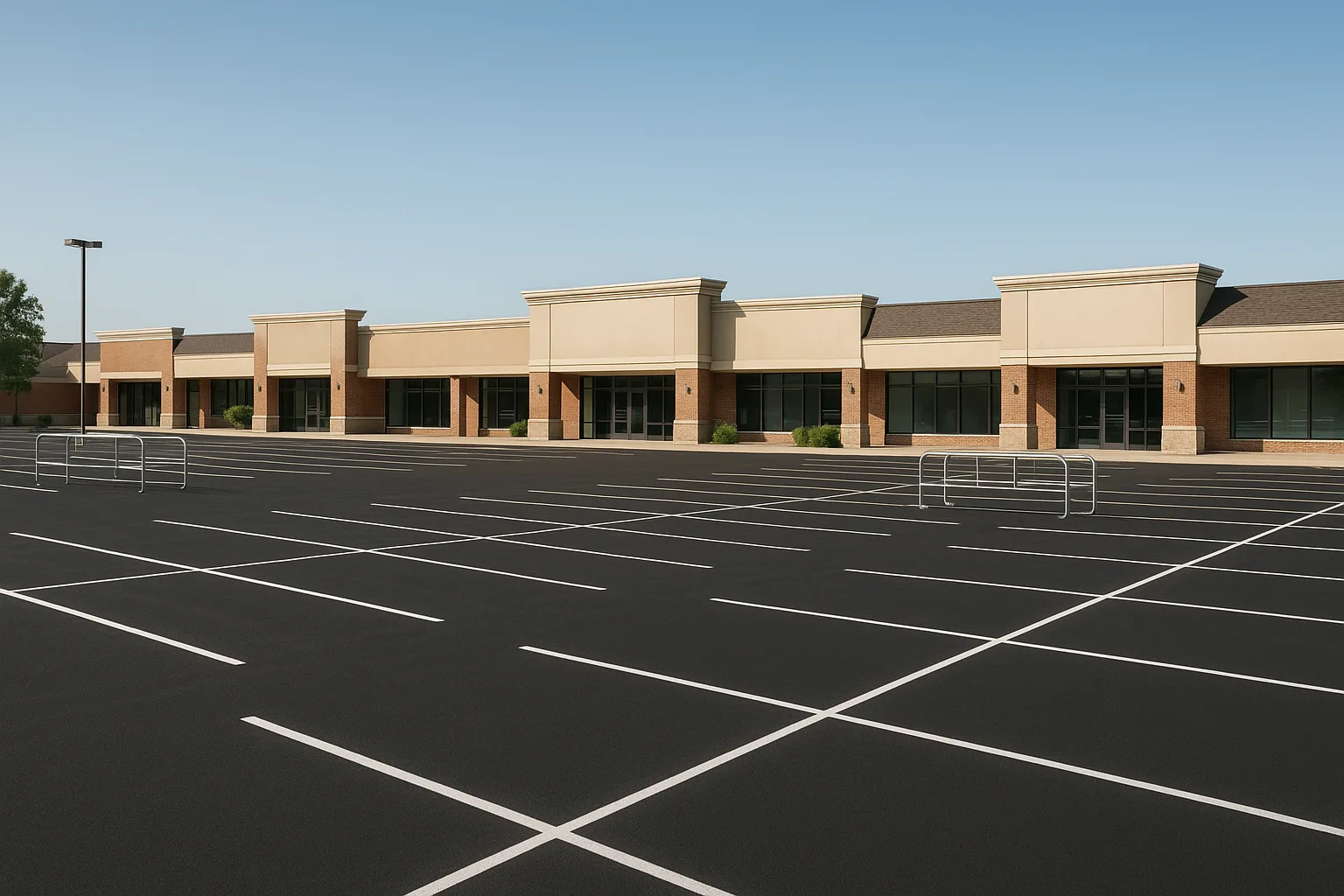
Most paving conversations are about how long a surface will last. In Leawood there is a second question running alongside it: how it will look when we leave. This is a city where public appearance is held to a genuine standard, and on a property like Town Center Plaza or Park Place a rippled joint or a heaped crack fill is a defect even when it is structurally irrelevant.
That is a fair expectation, and it changes how work gets planned rather than what gets built. Wider paving passes to reduce the number of longitudinal joints. Crack sealing routed and squeegeed flat instead of overbanded heavy. Night and weekend phasing on lots that carry a very high daytime population. None of it is exotic — it is just decided in advance instead of on site.
We work Leawood from Lee's Summit: the established north end, the professional districts along 119th Street, and the newer south side out to 135th. Insured and bonded, and clear about whether the right work is sealcoating, an overlay, or repair of what is settling underneath.
Our Leawood service list
Commercial paving, driveways, and repair have dedicated Leawood pages. Open any of the others for detail, or follow through to the metro service page.
Commercial Asphalt Paving
Lifestyle-centre and professional-office lots, phased around trading hours and finished to a standard that will be looked at closely.
Commercial Asphalt Paving →Driveway Paving
Executive drives, long approaches, and turning courts — where the edge line and the joint at the apron are as visible as the surface.
Driveway Paving →Asphalt Repair
Full-depth repair of settlement dips, particularly in the newer developments south of 119th Street.
Asphalt Repair →Overlays & Resurfacing
Mill-and-overlay on the 1990s south-Leawood lots now reaching the end of a first life.
Overlays & Resurfacing →Sealcoating
Appearance and binder protection together — the reason most Leawood properties seal on a set cycle rather than when trouble shows.
Sealcoating →Crack Sealing
Done well it is nearly invisible and buys years. Done badly it is a black scrawl across a lot people photograph.
Crack Sealing →Line Striping
Crisp layout, accessible routes, and the fire-lane marking retail centres are held to.
Line Striping →Asphalt Milling
Keeping a resurfaced lot at its original level so curbs, walkways, and thresholds still read correctly.
Asphalt Milling →What actually moves the price on a Leawood lot
When two bids differ here, it is almost never the asphalt. It is one of these six, and most of them are decisions you can make rather than costs you have to accept.
| Cost driver | Why it costs more here | What you can control |
|---|---|---|
| Working outside trading hours | Retail and office lots here carry very high daytime volume, so paving gets pushed to nights and weekends | Phasing more aggressively can keep some work in normal hours and take cost out |
| Saturated subgrade at landscape islands | Heavy irrigation keeps the ground beside islands and curbs wet year-round, and wet clay carries far less load | Fixing the irrigation overspray before paving is cheaper than building for permanently wet ground |
| De-icing chloride damage | Salt use on premium walkways and entries scales concrete and works on the asphalt binder beside it | Switching product on the walkways, and sealing on cycle, both slow it measurably |
| Finish and joint quality | A visible longitudinal joint or a rippled edge is a defect here even when it is structurally irrelevant | Paving a lot in wider passes with fewer joints costs more in plant time and less in complaints |
| Accessible route regrading | Slopes drift out of tolerance after years of patching, and restriping does not fix a slope | Doing the regrade during a resurfacing costs a fraction of doing it as its own project |
| Settlement in the newer south end | Alluvial soils near the Blue River drainage compact unevenly, so 20-year-old lots already show dips | Repairing the settled areas properly first is what stops a new surface repeating the pattern |
Why proper prep matters here
- ■
The clay moves an inch or two a year
Johnson County's heavy clay swells with moisture and shrinks during drought, creating 1–2" of seasonal vertical movement beneath Leawood lots. Without a properly compacted limestone base and geotextile separator, new asphalt cracks within its first year.
- ■
The south end settles unevenly
Newer developments south of 119th Street sit on alluvial soils near the Blue River drainage. These soils compact unevenly under load, causing localized settlement that shows up as dips, ponding, and early-onset cracking in lots that are barely 20 years old.
- ■
The load is delivery, not freight
There is very little heavy truck traffic in Leawood. What there is instead is constant high-frequency delivery movement into retail entries, and real turning stress at the 119th & Roe and 119th & Nall intersections. That concentrates wear at entrances and turning points rather than across the lot.
- ■
Two pavement ages, two answers
North Leawood lots date to the 1950s–70s and are maintenance-heavy. The 119th and 135th Street developments are largely 1990s and are now reaching the end of a first life, where the mill-and-overlay question comes up properly for the first time.
Around Leawood
Residential work runs through Hallbrook, Mission Farms, Whitehorse, Wilshire, Worthington, and the estate streets at Ironhorse, Tuscany Reserve, and Village of Seville. Commercial work concentrates at Town Center District, Park Place, Camelot Court, Leawood South Professional District. Access is off I-435, State Line Rd, Roe Ave, 119th St, and 135th St.
Bordering cities
Working in Leawood
Tarmasters is a Kansas City–owned paving contractor and the asphalt division of Ford Concrete and Paving, working across the metro since 2014. Running our own crews and equipment is what makes the finish decisions possible — paving in wider passes, or holding a lot for better temperatures, are calls we can make rather than negotiate with a subcontractor.
Commercial work runs under City of Leawood / Johnson County building codes. Leawood holds meaningful standards on stormwater, landscaping, and site appearance, and on a lot being re-laid those come into scope whether or not the previous surface met them. Insured and bonded — measured estimate, fixed price, firm sequence, and a straight answer about what your surface actually needs.
Leawood paving questions
Our lot is only about twenty years old and it already has dips. Why?
Where the property sits matters. Newer developments south of 119th Street sit on alluvial soils near the Blue River drainage. These soils compact unevenly under load, causing localized settlement that shows up as dips, ponding, and early-onset cracking in lots that are barely 20 years old. It is not a fault in the asphalt — it is the ground beneath consolidating unevenly. Resurfacing over it without repairing the settled zones puts the same dips back within a couple of seasons.
Can crack sealing be done so it does not look bad?
Yes, and it is worth insisting on. Routing the crack to a clean, consistent width before filling, keeping the overband narrow and squeegeed flat rather than heaped, and working in suitable temperatures all matter. The difference between an unobtrusive repair and a black scrawl across a lot is technique and care, not product.
Why do the walkways and curbs deteriorate faster than the parking?
De-icing salt. Premium pedestrian areas get treated heavily through winter, and that chloride concentration scales concrete surfaces and attacks the curb line. The asphalt beside it takes the run-off. The mitigations are real but unglamorous: choose a less aggressive de-icer on pedestrian surfaces, keep drainage moving so brine does not pond, and seal on schedule.
How does Martin-Woodson series clay-loam affect a Leawood driveway?
Johnson County clay swells with moisture and shrinks in drought, and the seasonal vertical movement under a lot here is enough that a surface laid on a thin base cracks within its first year. The defence is a properly compacted limestone base with a geotextile separator, and a grade that keeps water off the clay rather than delivering it there.
Do you work around business hours at the retail centres?
Yes. The core retail district carries a very high daytime population, so lots there are phased and the paving stage is generally run at night or over a weekend. The sequence and the closed-area map come with the estimate, so tenants can be told before anything starts.
Free estimates across the Kansas City metro.
Driveways, parking lots, and repairs across the Kansas City metro, since 2014.
Call Now: (816) 789-0700Tarmasters Asphalt Paving
Lee's Summit, MO 64063 | Serving the Kansas City metro | Insured | Bonded